

The devastating fires at Düsseldorf Airport in 1996 and Grenfell Tower in London in 2017 claimed 89 lives. In both cases, materials such as conventional cables contributed to the rapid spread of the flames. This is even more critical in enclosed infrastructures such as underground tunnels, where escape routes are limited and evacuations are difficult. Tests under real conditions show that plastics pose the greatest danger. In the event of a fire, they produce smoke or toxic gases that react chemically with extinguishing water, which can lead to highly irritating vapours. In many cases, it is not the flames themselves but the toxic smoke that poses the real danger to humans.
LAPP has developed a comprehensive portfolio of connectivity solutions and system accessories that are specially designed for applications with increased fire protection requirements. But what actually makes a cable fire-safe? As the global market leader in integrated solutions and branded products in the field of cable and connectivity technology, LAPP starts where fire protection needs to be effective: with the materials used for insulation and sheathing. In particular, the plastic used to make the cable sheathing determines the fire behaviour of a cable, as this outer layer is the first to come into contact with flames.
The challenge for LAPP’s developers is to find the right combination of materials and cable construction for specific requirements. ‘Our goal is to prevent the cable sheath from igniting and the fire from spreading along the cable, while minimising the formation of smoke and harmful gases,’ says Jürgen Beck, Product Manager at LAPP.
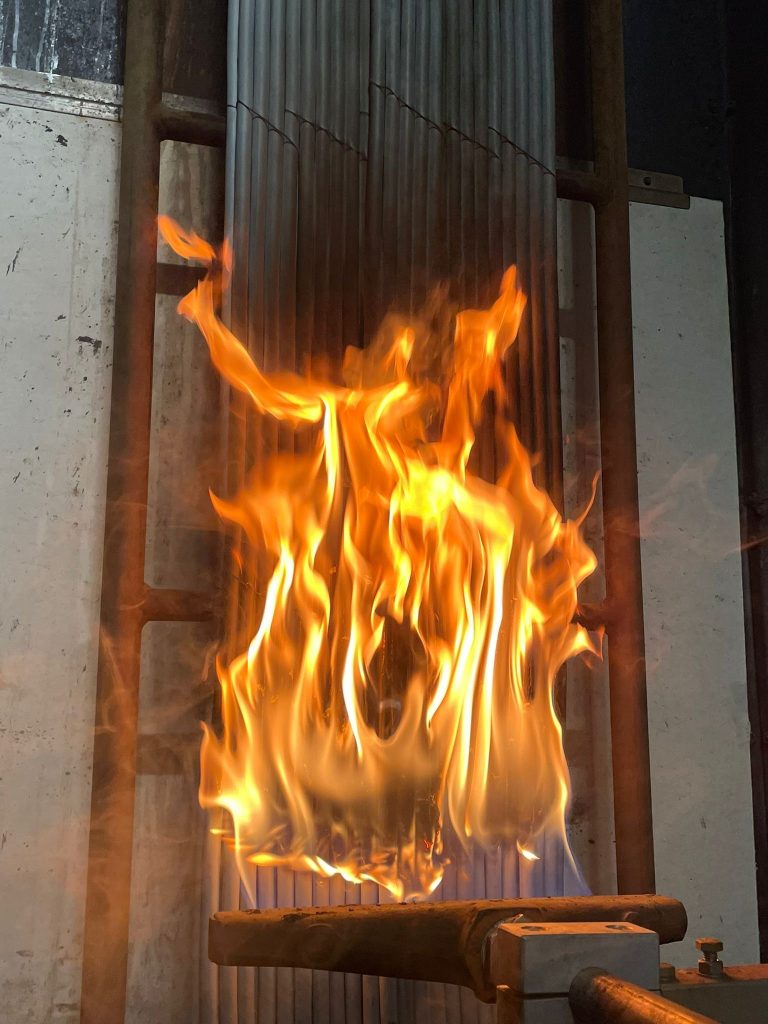
Tests in the fire chamber
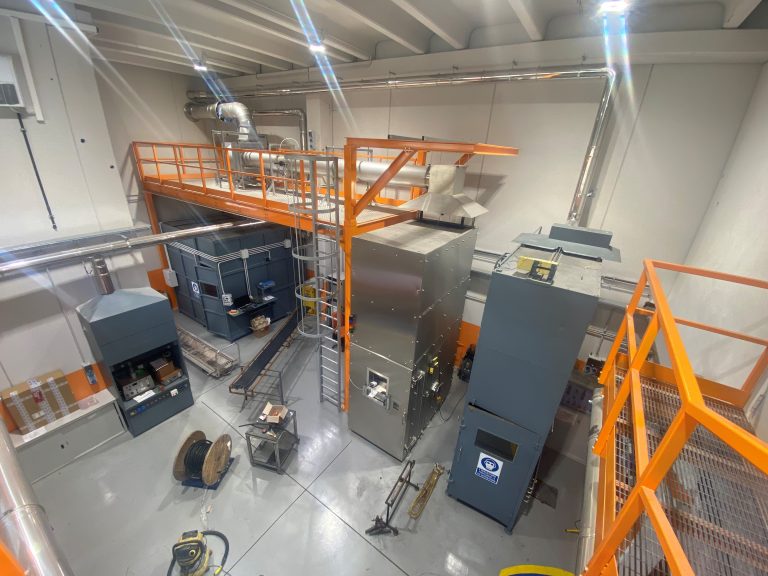
The requirements that a cable must meet in terms of fire protection are specified in numerous specific and international standards. For example, EN 45545-2 applies to railway vehicles and the international IEC / EN 60332 series of standards applies to fixed installation in buildings. In addition, there are numerous other specifications, depending on the application, industry and country. LAPP meticulously checks compliance with these requirements and guidelines. LAPP operates a state-of-the-art fire testing laboratory in Italy. Other laboratories and testing facilities are located at LAPP’s largest production site in Forbach, France, in Asia and in the USA, where the UL standards applicable in North America are tested. ‘To ensure that our cables meet the highest safety standards, they are certified by independent, accredited testing institutes,’ says Jürgen Beck.
LAPP uses various standardised test procedures to evaluate the fire behaviour of cables under realistic conditions. The most important test criterion here is the so-called burn height. To determine the burn height, a cable is clamped vertically and exposed to a burner on the underside for a specified period of time. The test measures how far the flame spreads upwards along the cable, at what height the plastic dissolves, whether material drips down and how quickly it extinguishes. In another procedure, known as the bundle burn test, several cables are bundled together and heated with a more powerful burner.
This simulates the typical conditions in cable ducts, such as those found in building services engineering. The smoke behaviour of the cables is also evaluated: a light barrier determines the transmission degree of the smoke and thus how severely visibility is impaired in the event of a fire. This is a decisive factor for safe escape and rescue of people in burning buildings or vehicles.
Halogens: flame-retardant but harmful to health
Additional laboratory analyses then determine the halogen content in the smoke gas. The results show how much the fire behaviour of a cable depends on the material used for the outer sheath. Standard cables usually have a PVC (polyvinyl chloride) sheath, which contains the halogen chlorine. Halogens such as chlorine and fluorine have a flame-retardant effect, which is why halogen-containing cables are flame-retardant. However, once they start burning, the chlorine they contain can release corrosive gas when it comes into contact with extinguishing water or humidity – which attacks materials and irritates the respiratory tract. That is why PVC cables are used in places where there are few people or where escape routes are short.
Halogen-free cables are an alternative. To ensure they provide the necessary safety in the event of a fire, their plastic sheath contains large amounts of flame retardants such as aluminium trihydroxide or magnesium hydroxide. Up to 60 percent of these additives can be contained in the plastic. Sounds like the ideal solution? Almost – because the flame retardants make the plastic sheath rather brittle, which makes the cables less flexible. Halogen-free and highly flame-retardant cables are therefore particularly suitable for fixed installation, for example in cable ducts.
This disadvantage can be mitigated by using special, very high-quality polymers. This means that even fire-resistant cables can be highly flexible and easy to install or use in moving applications. LAPP’s developers are also working on further adjustments to improve fire protection, for example by varying the cable structure.

Cross-linking: electrons instead of additives
Cross-linked cables are a powerful alternative to halogen-free cables with additives. They are treated in such a way that the molecular chains in the plastic combine to form longer chains. This improves both fire and temperature behaviour as well as mechanical stability. This cross-linking can be achieved chemically using additives or – more precisely and with better properties – by radiation cross-linking. In this process, the finished cable is irradiated with electrons, which forms stable cross-links in the material. At its plant in South Korea, LAPP operates a radiation cross-linking facility where cables for the railway industry with the highest fire protection requirements are primarily manufactured.
By the way: flame-retardant does not automatically mean heat-resistant. In applications with high temperatures, such as combustion engines or melting furnaces, connectivity solution s with a different material composition are required. Cables with a silicone sheath or a protective glass fibre sheath are suitable, for example.
The (almost) perfect cable
In practice, there is no such thing as the perfect cable that meets all requirements – from fire protection and flexibility to mechanical and chemical robustness. The operating conditions, norms and safety standards are too diverse. And yet there are solutions that combine many of these properties: with the ÖLFLEX® CLASSIC 110 H series, LAPP has developed a cable that combines temperature resistance down to -30°C with oil resistance and high flexibility.
At the same time, this connection and control cable is halogen-free and highly flame-retardant, which reduces the risk of fire propagation, high smoke density and toxic fumes in the event of a fire. Its fire behaviour is classified in accordance with EU Directive 305/2011 (BauPVO/CPR).
Technical safety is not achieved solely by complying with standards – understanding the application is also important: in order to develop fire-safe connectivity solution s, the interaction between material, design and technical expertise must be right. ‘Fire protection does not begin with testing, but with the question of how and where a cable is used and what it has to do there,’ says Jürgen Beck.
Whether standard cables or customised special designs, LAPP develops connectivity solutions that prove themselves in an emergency.