

What is the topic of your PhD?
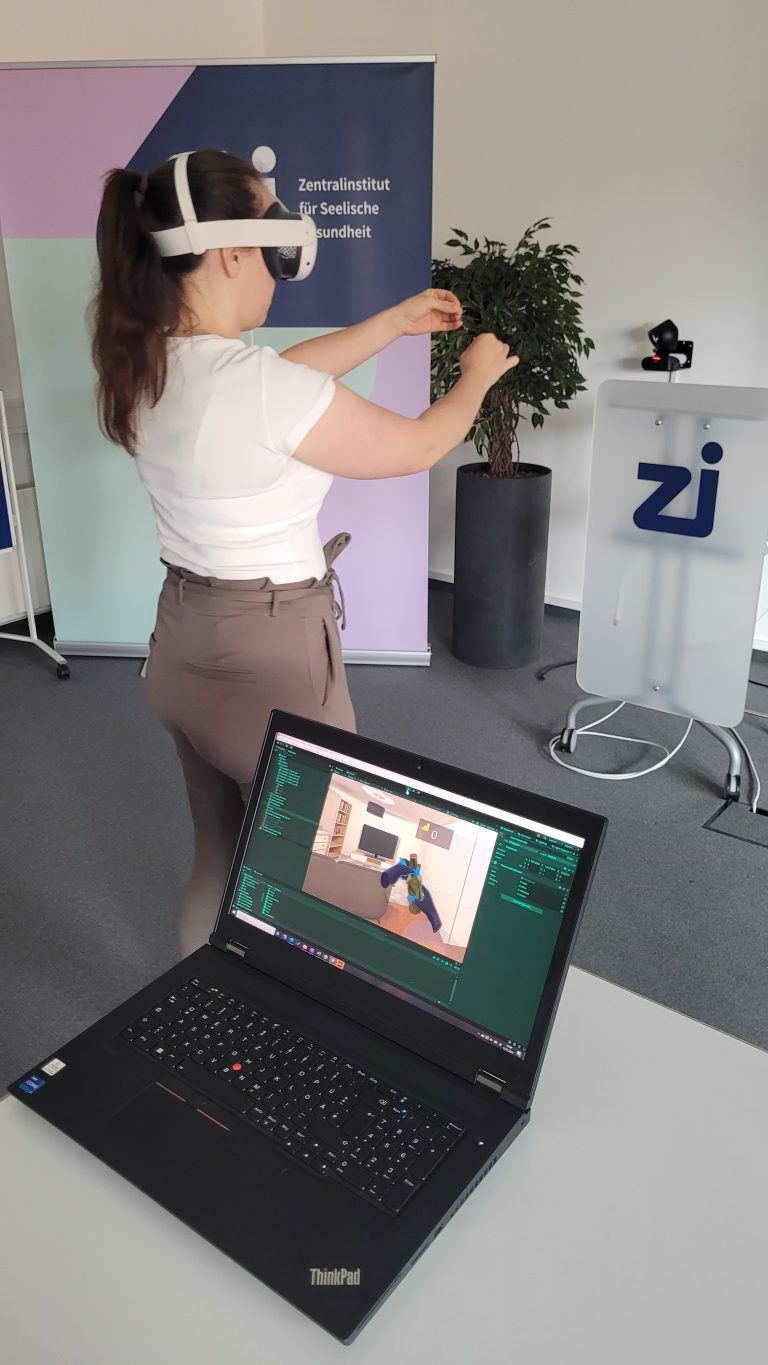
Veronika Landhäußer: I am researching the use of virtual reality in addiction therapy. The idea for this arose during my master’s degree as part of a mixed-reality project. Within my research project, I am primarily investigating how personalisation can be implemented in virtual reality applications for use in alcohol addiction therapy – for example, with the help of adaptive AI-supported models. Alternative innovative applications in a therapeutic context are in high demand, and the individual design and adaptability of these applications play a major role.
This link between technical development and practical application in a healthcare context is what makes this project particularly exciting for me. Alongside my research work, I work as a research assistant in the field of software engineering.
How did you come to work in the STEM sector?
Veronika Landhäußer: Even as a child, I was fascinated by computers. My first device of my own, a laptop running Windows 98, soon became my daily companion. I remember that my uncle encouraged my enthusiasm for technology – he taught me how to use the computer and find my way around the internet. Looking back, it was precisely these little moments that sparked my enthusiasm for technology.
Later, I attended a technical grammar school specialising in computer science. Unfortunately, however, computer science didn’t suit me as well as I’d hoped. That changed when I discovered the Automotive Systems Engineering degree programme. But even there, it eventually became clear to me that this field wasn’t for me in the long run. The decision to focus more on computer science again during my master’s degree turned out to be a turning point. That’s where I found my professional home and eventually gained access to research and a PhD.
How did you find your education and your career path so far?
Veronika Landhäußer: Während meines Studiums habe ich immer wieder erlebt, wie mein Geschlecht im MINT‑Umfeld sichtbar wurde – sei es durch den niedrigen Frauenanteil oder das Gefühl, mich stetig beweisen zu müssen. Nicht unbedingt, weil jemand das aktiv einforderte, sondern weil diese Erwartung, sich als Frau ständig beweisen zu müssen, gesellschaftlich tief verankert ist. Vor allem während meines ersten Studiums hatte ich Zweifel und das Gefühl, nicht mithalten zu können. Was mir geholfen hat, war mein Ehrgeiz. Ich wollte das zu Ende bringen, was ich begonnen hatte. Rückblickend bin ich sehr froh darüber. Wer weiß, ob ich heute sonst meinen Weg in die Forschung gefunden hätte.
How did you find your education and your career path so far?
Veronika Landhäußer: During my studies, I repeatedly experienced how my gender became visible in the STEM environment – whether through the low proportion of women or the feeling that I constantly had to prove myself. Not necessarily because anyone actively demanded it, but because this expectation that, as a woman, I constantly have to prove myself is deeply ingrained in society. Especially during my first degree, I had doubts and felt I couldn’t keep up. What helped me was my ambition. I wanted to see through to the end what I had started. Looking back, I’m very glad I did. Who knows if I would have found my way into research today otherwise.
What do you particularly enjoy about your job?
Veronika Landhäußer: What I enjoy most is interacting with lots of different people. At conferences, in projects and when working with my team, I’m constantly discovering new perspectives. It feels good to see your own network grow and to become part of a community whose members work on similar topics and support one another. This sense of togetherness and the feeling of making a difference together motivate me.
What does the Ursula Ida Lapp PhD Scholarship mean to you?
Veronika Landhäußer: For me, the PhD scholarship is more than just financial support. I was impressed by the story of Ursula Ida Lapp and her journey as a founder and entrepreneur. I was thrilled that an internationally successful company is committed to supporting women in technology and research. The conceptual aspect is particularly important to me: the network, the visibility of women in science, and the opportunity to serve as a role model myself. I am grateful to be part of this initiative and to have the opportunity to share my experiences.
What are your hopes for the future of women in STEM careers?
Veronika Landhäußer: My hope for the future is that women in STEM fields will no longer be seen as the exception, but will be regarded as a natural part of the landscape. Visibility plays a key role in this. Only when girls and young women see role models can they envisage themselves in technical and scientific roles. Initiatives by universities and companies make an important contribution
What would you advise girls and women who are interested in STEM careers?
Veronika Landhäußer: Focus on what interests you and form your own opinion. Don’t let others dictate how your life should look. We live in a time where women can choose their own path, and that’s exactly what we should make use of. The path into research may still seem unconventional for many women, and depending on the field, perhaps even unusual. But that doesn’t mean it’s not possible. Trust in your abilities, find people who support you, and have the courage to follow your own path.
Thank you very much for the interview!
Joanna Amor
Head of TAED LA EMEA & Global DEI Manager
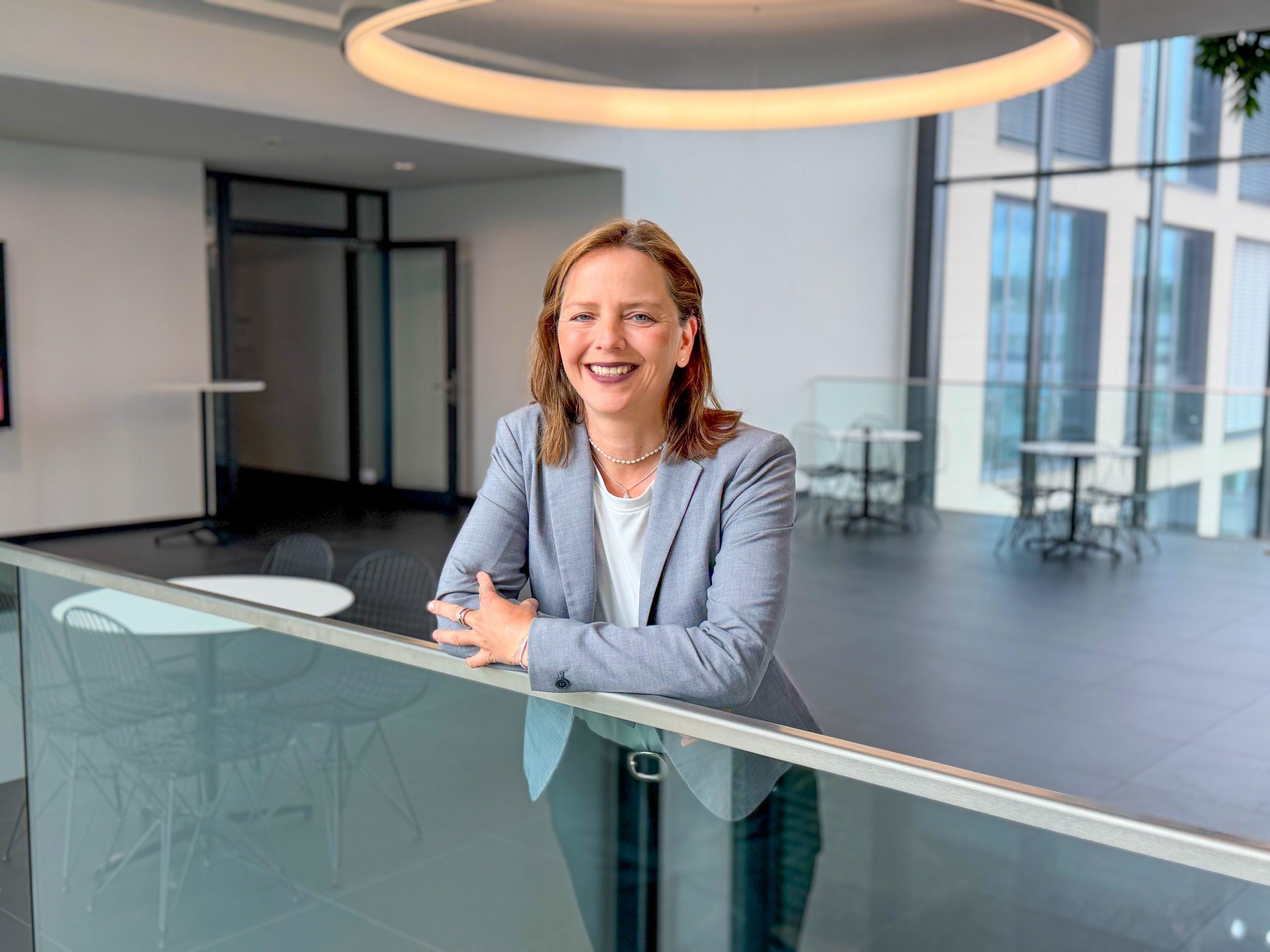
“For me, the Ursula Ida Lapp Scholarship is a truly special initiative because it offers young people real opportunities to fulfil their potential. At LAPP, we believe it is important to create opportunities – regardless of an individual’s background. That is why I particularly value our close collaboration with Heilbronn University, which makes exactly that possible.”