

Giving your best in the here and now, and managing day-to-day operations efficiently and effectively – this is a key aspect of business success. At the same time, companies would do well to look beyond the immediate present so as not to be overtaken by relevant developments. Ambidexterity is the term used to describe the ability to combine both; it is a key principle at LAPP. The LAPP Technology Advisory Board also operates in this spirit: four renowned scientists support LAPP’s Executive Board in identifying technology trends at an early stage, so that the company can adapt to them both today and in the future.
Shaping the technological future for more than a decade
A ‘fireside evening’ with leading academics, members of LAPP’s Executive Board and family representatives – that was the idea of Siegbert Lapp, the eldest son of the company’s founders, Oskar and Ursula Ida Lapp, when he convened the Technology Advisory Board at in 2010. The experts were tasked with supporting the board and the family in looking towards the technological future by identifying and contextualising relevant trends, providing advice on the development of the organisation and its business sector, and also by fostering collaborations and establishing contacts with political, business and scientific networks. Three to a maximum of four advisory board meetings take place each year, alongside visits to institutes and collaboration partners. The council, comprising four scientific experts, provides information on relevant technological trends such as carbon nanotubes (CNTs), direct current, artificial intelligence and Predictive maintenance, which often lead to specific innovation projects at LAPP. Furthermore, the Advisory Board has been involved in establishing innovation structures, such as the Stage-Gate process. In January 2023, a workshop was held to realign the Technology Advisory Board, during which it was decided to focus it more closely on LAPP’s day-to-day operations and process landscape.
An overview of the participating academics
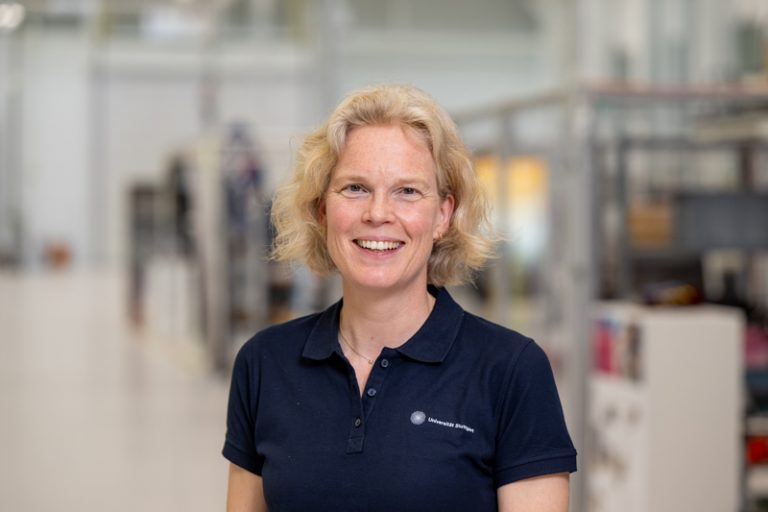
Prof. Dr Katharina Hölzle heads the Institute for Ergonomics and Technology Management (IAT) at the University of Stuttgart and the Fraunhofer Institute for Industrial Engineering (IAO). Her work focuses on how technologies are transformed into innovations, how research is effectively translated into business practice, and what capabilities companies and regions require to achieve this. “As a researcher in technology and innovation, I want not only to observe transformation but also to help shape it – and LAPP, as a family-run and forward-looking global market leader, is an ideal partner for this,” says Katharina Hölzle of her role on the advisory board. “Following the first few meetings, I am particularly impressed by how open and inquisitive the discussions are at LAPP – and how quickly joint technology foresight translates into concrete innovation work.”
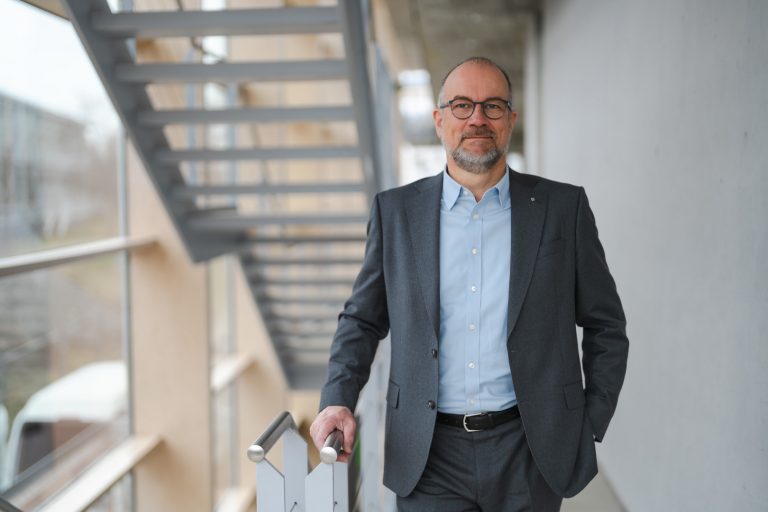
Prof. Dr Oliver Riedel has headed the Institute for Control Engineering of Machine Tools and Manufacturing Systems (ISW) at the University of Stuttgart since 2016 and is Dean of the Faculty of Design, Production and Vehicle Engineering. Since June 2018, he has also been Director of the Fraunhofer Institute for Industrial Engineering. He sees great added value for LAPP in the Technology Advisory Board: “Relevant technology trends are systematically assessed here from a variety of scientific perspectives. This enables the company to identify opportunities and risks at an early stage and translate them into targeted innovations,” says Riedel.
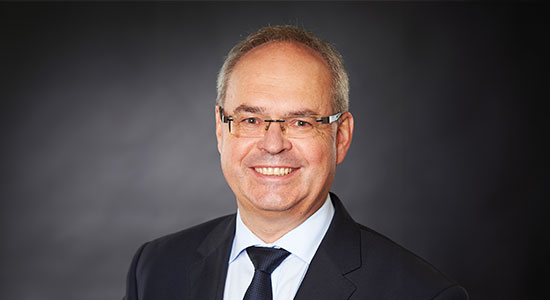
Prof. Dr Jürgen Fleischer has held the Chair of Manufacturing and Assembly Technology and served as Head of the Institute of Production Engineering at the Karlsruhe Institute of Technology (KIT) for over 20 years. He has been a member of the Technology Advisory Board since 2016. His highlight so far in this context: “The trip to AIRBUS was brilliant. When I suggested developing and using an intelligent stringer with embedded cable harnesses for aircraft construction, Siegbert Lapp was immediately on board. We tried to carry this out as an aerospace research project, but unfortunately that didn’t work out. The idea was a good one nonetheless.”
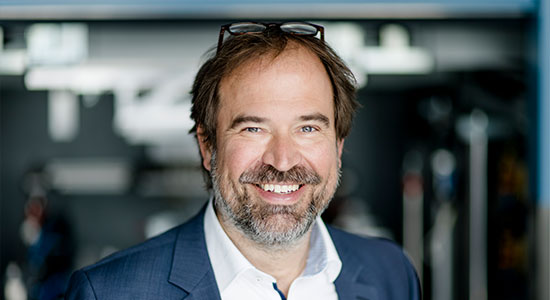
Prof. Dr Dietmar Drummer has conducted the Chair of Plastics Technology at the University of Erlangen-Nuremberg since 2009. He has been a member of the Advisory Board from the very beginning. Commenting on this role, he says: “What I particularly appreciate about the Advisory Board is the great openness and breadth of the technical discussions. Materials, technologies and systems are evaluated equally, but are always contextualised within the framework of technological maturity and market developments.”
There is a close, collaborative relationship between the scientific advisers and LAPP’s management, characterised by open and trusting dialogue. The institution is therefore well-positioned for the future and will continue to sharpen LAPP’s management’s technological awareness and raise awareness of relevant research projects. This enables LAPP to remain at the cutting edge and look beyond the present horizon – thereby ensuring its capacity for innovation and customer focus in the long term.