
Innovation live rather than behind closed doors
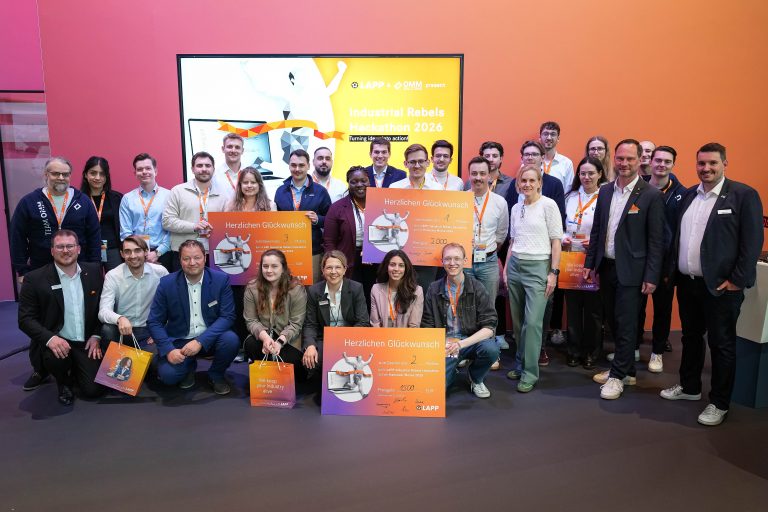
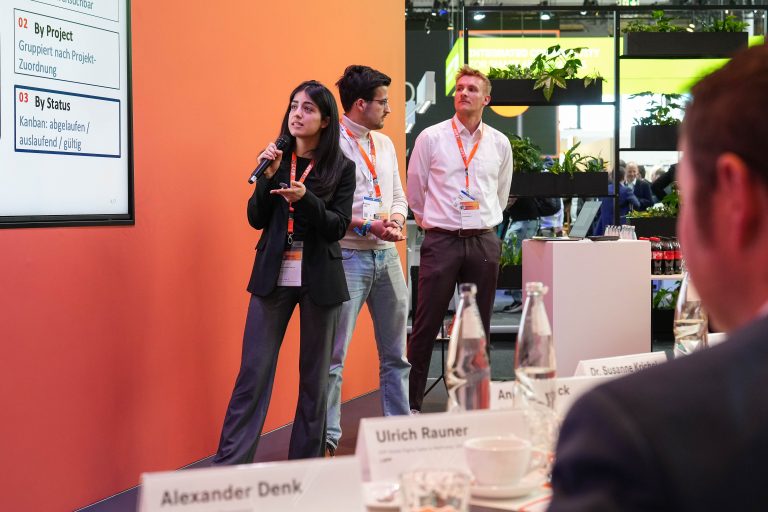
With the hackathon, the Stuttgart-based family-owned company ventured into a new event format. Instead of developing ideas behind closed doors, LAPP made innovation processes directly tangible for visitors. Within five and a half hours, interdisciplinary teams of students from the fields of mathematics, computer science, natural sciences, engineering and economics developed new concepts for AI-supported services, data-driven business models and sustainable industrial applications.
The result was not just prototypes, but fresh perspectives on real-world challenges of the industry. For the students, this meant an intensive practical experience – for LAPP, a clear expression of its self-image as an innovative company.
Using real industrial data to create new services
The hackathon was based on anonymised consumption and logistics data from the LAPP eKanban solution. This sensor-based cable inventory management system links traditional cable reels with the system’s procurement processes in the digital world. Customers can monitor their cable consumption in real time, trigger automatic reorders and optimise their stock levels.
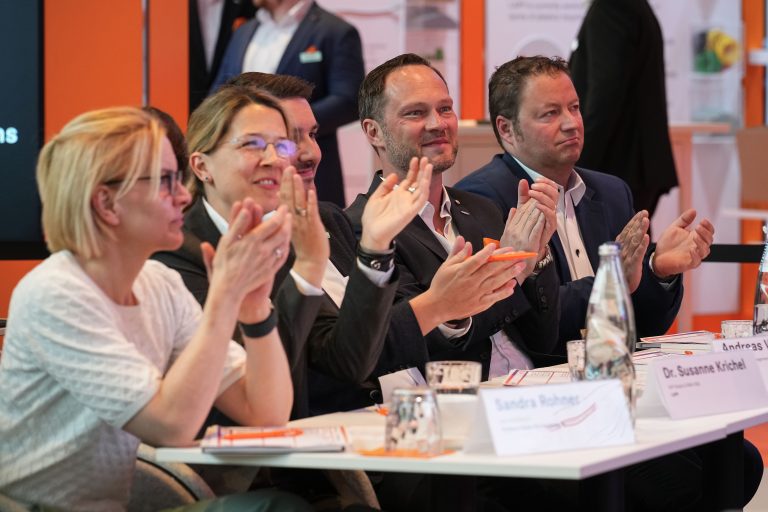
The key question for the teams was: What additional value can be generated from this data? How can AI, statistics and business logic be used to develop new services – for instance, to improve efficiency, promote sustainability or enable predictive planning? “IIoT solutions in particular are among the most important drivers of innovation and growth in the industry,” emphasises Dr Susanne Krichel, Head of Research and Development at LAPP and a member of the jury. “It is enormously valuable for us to involve young talent at an early stage and to get to know their approaches.”
Theory meets industrial reality
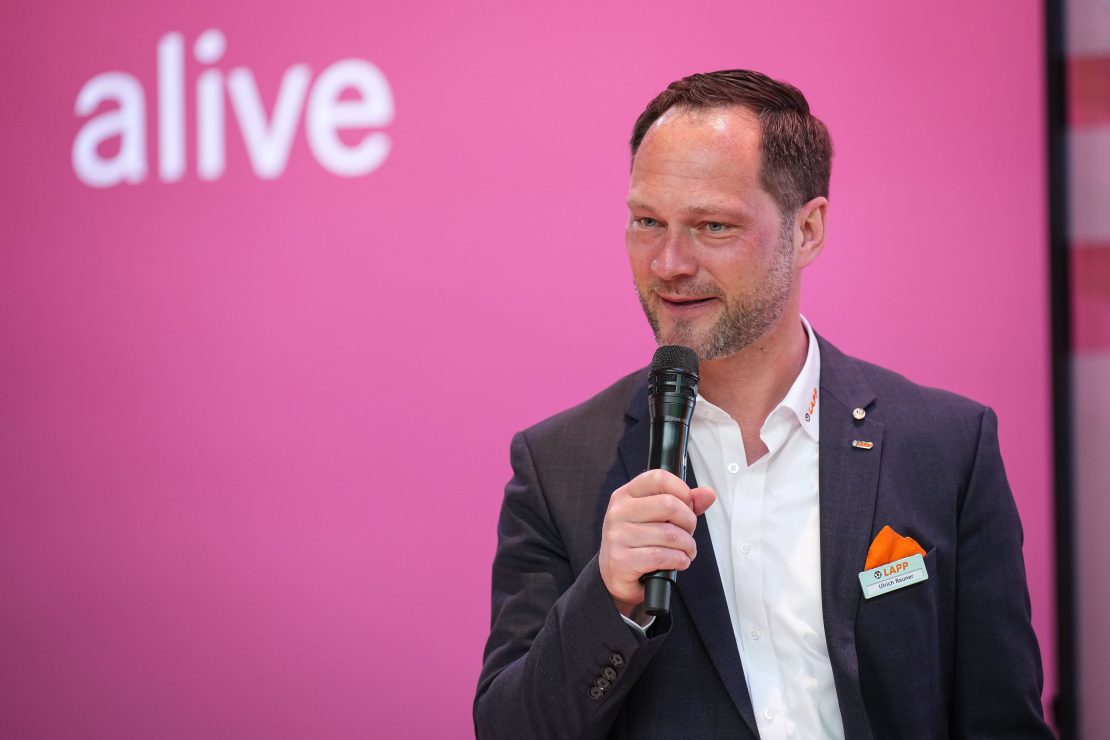
Participants underwent intensive preparation weeks before the trade fair. They familiarised themselves with LAPP’s product ranges, applications and business models, and delved into the underlying data. But it was only at the Hannover Messe that it became clear who could develop creative solutions under time pressure, interpret data meaningfully and communicate ideas convincingly. “The hackathon is a real reality check – for both sides,” explains Ulrich Rauner, responsible for digital business at LAPP and patron of the hackathon. “The students leave the lecture theatre and work on real industrial challenges. And we gain direct insights into the mindsets, priorities and expectations of the next generation. After all, for us, the participants are not just potential employees, but also the customers and partners of tomorrow.”
Students as catalysts for the industry of tomorrow
A key added value of the format lies precisely in this shift in perspective. Sustainability, the circular economy, data-driven services or new service models – young talents naturally take many of these topics into account. “Our aim as a student consultancy is to look beyond everyday university life,” says Carl Nitsche from Junior Business Team e.V. in Stuttgart. “A hackathon at Hannover Messe is a unique opportunity to be right at the heart of the industry – and not just to watch, but to actively help shape it. That is an enormous opportunity.”
The hackathon was conceived and moderated in collaboration with innovation partner OMM Solutions. Managing Director Dr Martin Allmendinger has been supporting SMEs with internal and external digital innovation processes for years: “Live innovation formats like this demonstrate how quickly viable solutions can emerge today,” he notes. “In just a few hours, you get a solid sense of an idea’s potential. Traditional processes often take weeks or months to achieve this.” However, preparation was still necessary to ensure the students could bring their ideas to life within a few hours at the live hackathon. To this end, Dr Martin Allmendinger and his team provided intensive support and methodological preparation to the participating students in advance, acting as sparring partners.
The fact that the hackathon took place publicly at a trade fair stand is a deliberate signal for LAPP to promote transparency, the courage to experiment, and a willingness to shape innovation together with external partners and up-and-coming talent. “Not everything is perfect – but that is precisely what defines a modern culture of innovation,” says Ulrich Rauner.
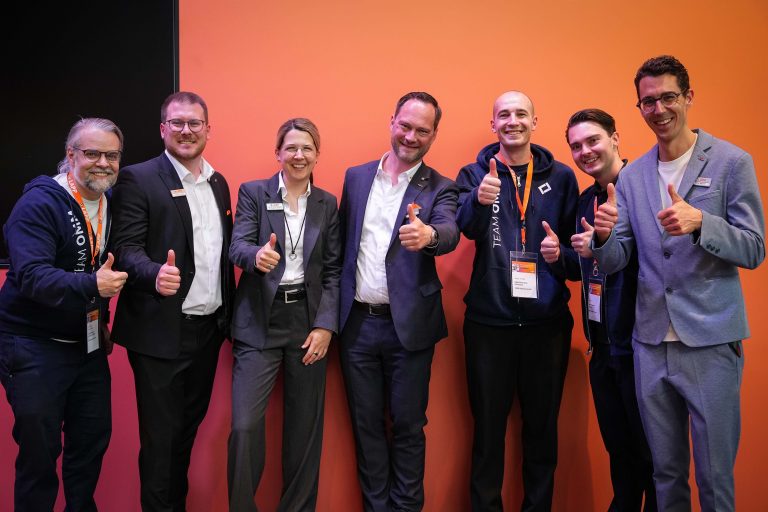
Diverse ideas with measurable added value
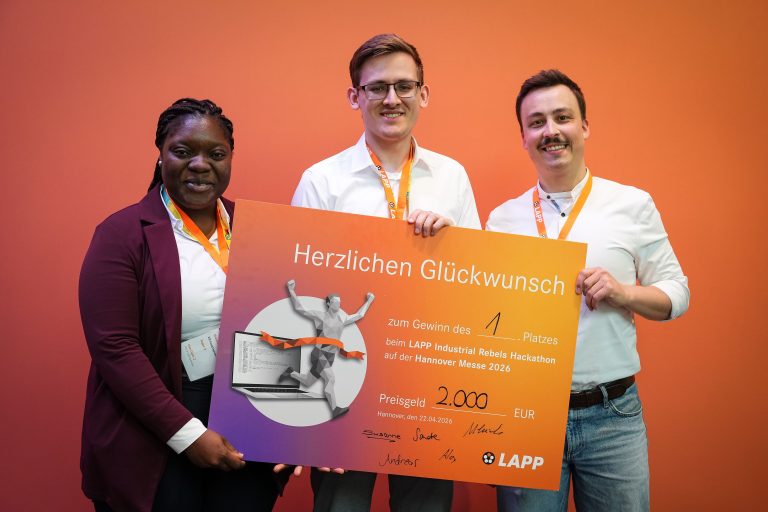
The tasks ranged from “Information as a Service” through CO2 and “Total Cost of Ownership” optimisation to predictive analytics for the supply chain. Concepts that combined economic efficiency with sustainability were particularly convincing. The winning team, for instance, developed a prototype core cross-section optimiser, enabling customers to visualise the optimal TCO and CO2 levels, payback period and breakdown per cross-section. The result: guided cable optimisation throughout the entire machine, including shop floor reconciliation and product recommendations, to identify the ideal cable with the optimal core cross-section for the specific application. And the jury is unanimous: this pitch holds great potential for LAPP.
“Working with real industrial data is a unique opportunity for us. We have combined business, computer science and engineering – and realised just how much a small but diverse team can achieve,” reports Tobias Eglseder from Junior Business Team e.V. about himself and his team members Morelle Foba, VDI Young Engineers, and Sascha Roelofs, Aalen University of Applied Sciences. The team won the challenge and took first place.
Tobias Eglseder: “For me, the key takeaway is that we were all able to contribute our skills and knowledge, think ahead together and learn a great deal in the process. We hadn’t expected to win – which makes the result all the more rewarding for our efforts. This recognition motivates us greatly and will stay with us for a long time.”
There is also a consensus among the students regarding the format:
It is not the monetary prize, but the direct exchange with industry experts at the leading international trade fair that is the real reward. “The fact that we can gain experience through such formats and have our ideas taken seriously is incredibly motivating,” confirms Tina Rasheed, a participant from Junior Business Team e.V.
LAPP as an employer with a vision for the future
For LAPP, the hackathon is more than just a one-off project. It represents a clear strategic stance: innovation arises where different perspectives meet. Openness, dialogue and the targeted promotion of young talent are key factors for success. “Such formats also contribute to securing a skilled workforce,” summarises Ulrich Rauner. “They demonstrate that we live and breathe innovation – not just technologically, but culturally as well.”
The live hackathon at the Hannover Messe demonstrated exactly that: LAPP as an innovative company that seeks dialogue, nurtures talent and works together with the next generation on solutions for the industry of tomorrow. Or, as Carl Nitsche puts it from a participant’s perspective: “It’s easy to imagine joining LAPP after graduation – and seeing your own ideas become reality.”