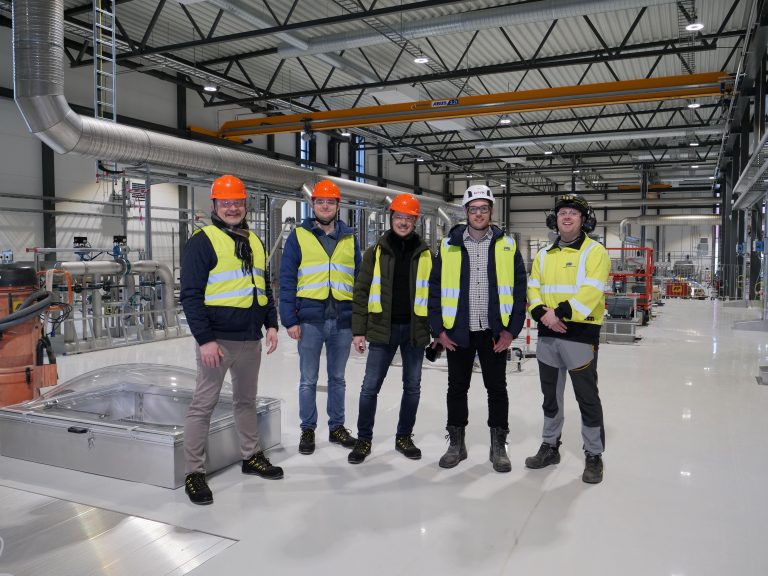
The Oslo Fjord, off the coast of the Norwegian capital, is a popular destination for day trips. However, anyone sitting on its shores in summer would hardly suspect what is happening in the water: decades of eutrophication caused by agricultural effluent have thrown the ecosystem out of balance. This leads to an excess of nitrogen, which encourages the massive proliferation and blooming of algae. When these die off, their decomposition consumes the oxygen in the water and the habitat suffer as a result. Fish, plants and the entire ecological system bear the consequences.
The Norwegian government has responded by tightening discharge limits. For the local authorities along the fjord, this means they must upgrade their sewage treatment plants to a new standard that remains stable even under changing environmental conditions. Fredrikstad, a town around 90 kilometres south of Oslo, is hit, as large-scale agriculture in the surrounding area increases nutrient input. That is why FARA has been built – a new, forward-looking wastewater treatment plant for Fredrikstad and Hvaler. The new treatment plant is designed to treat wastewater more efficiently in the future, thereby helping to restore the ecosystem. The client and operator is FREVAR KF, the municipal specialist in wastewater treatment, water treatment, energy recovery and waste disposal. And to ensure that such a concept functions reliably in the day-to-day operation of an industrial plant, it requires not only sophisticated process engineering but also a well-designed automation and electrical infrastructure.
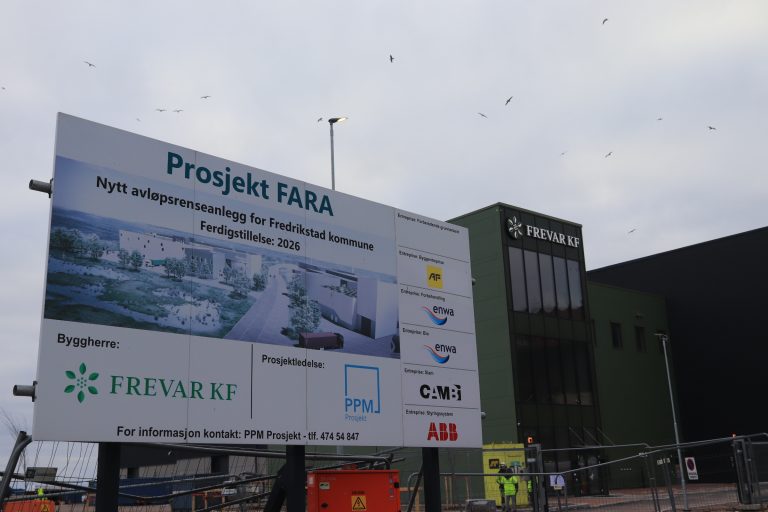
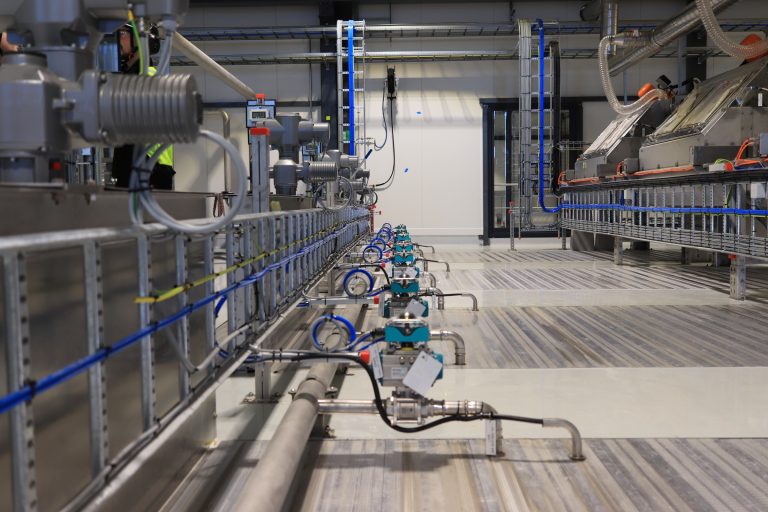
This is supplied by Moss Elektro, which has been commissioned to carry out the installation, and which uses connection solutions from LAPP. The Stuttgart-based global market leader in integrated solutions for cable and connection technology thus ensures the transmission of automation, power and data within the plant, even under conditions that pose EMC challenges. Kristoffer Pettersen, Head of the Industry & Commercial Markets at Moss Elektro, comments: “Given the long cable runs and the large number of frequency converters in particular, we needed connection technology that offers high EMC safety. LAPP’s connection solutions have given us the necessary stability and planning certainty.”
A blueprint for the next generation of sewage treatment works
With FARA, FREVAR KF is pursuing a holistic approach that extends far beyond mere wastewater treatment. Since construction began in 2023, a facility has been under construction in Øra: a building for pre-treatment and biological treatment, including an administrative wing; a separate building for sludge treatment; and two digestion towers. The plant forms part of an overarching circular economy strategy and is set to generate its own energy in future, for example via photovoltaic panels on the roof, through heat recovery, and by using sewage sludge to produce biogas, which serves as fuel for buses in Fredrikstad. In the long term, the aim is to achieve energy-positive operation, whereby the plant generates more energy than it consumes. With commissioning scheduled for 2026, the project is already regarded as a blueprint for future energy- and resource-efficient sewage treatment works.
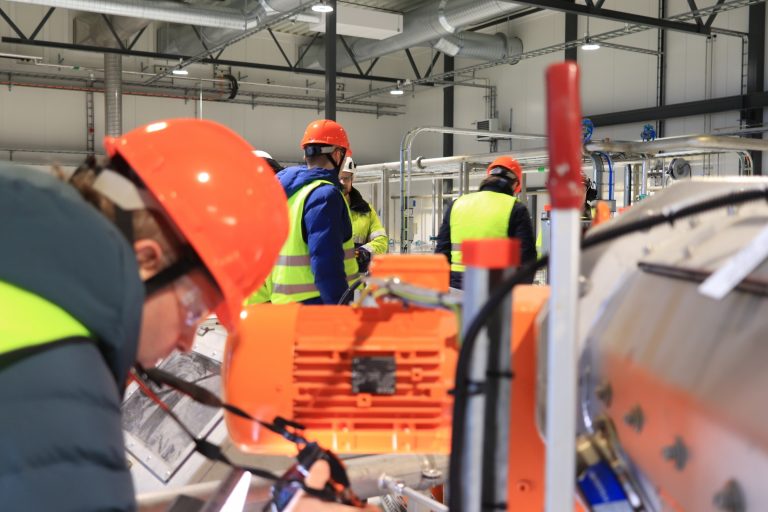
Technically, FARA relies on the biological MBBR (Moving Bed Biofilm Reactor) process. In this process, microorganisms colonise freely moving biofilm carriers that remain in motion within the flow-through tanks. Their large surface area creates a high biomass density, which maintains stable degradation of nitrogen, phosphorus and suspended solids even when the load fluctuates. The plant is designed to reduce nitrogen by up to 85 per cent, tackling the problem precisely at the source of the fjord’s eutrophication. FARA would be the first plant in Norway to achieve this level of reduction.
When 100 metres simplifies the installation process at the site
At the same time, the project presents a number of technical challenges. The plant comprises around 130 frequency-converter-controlled drives, pumps and fans with power ratings of up to 11 kW. In addition, there are three large drives for Archimedes screws, each with a power rating of 250 kW. Each screw pump is around 20 metres long, measures approximately 2.5 metres in diameter and lifts the wastewater, including solids, by around ten metres to provide the required head for the downstream processes. During normal operation, two of the three screw pumps are in operation; the third can be switched on during maintenance or when there is a high inflow. The entire plant is designed to be in accordance with this redundancy principle. One particular feature complicates the cabling: the frequency converters are housed centrally in the switch rooms, whilst the motors are distributed throughout the plant. This results in cable runs of up to 100 metres between the converter and the motor.
Such long cable runs have implications for electromagnetic compatibility. Frequency converters generate their variable output voltage via pulse width modulation with steep switching edges and high dv/dt values. These edges release high-frequency interference currents in the range from 3 kilohertz to 1 megahertz. In addition to local coupling at the drive and motor, these currents couple capacitively within the motor cable into grounding system, with increasing cable length resulting in higher common-mode current levels.
Although power, control and data cables were routed in separate cable trays and cable ladders to minimise direct electromagnetic coupling, the common-mode currents return through the plant-wide grounding and bonding network. Because the shields of industrial communication and instrumentation cables are normally connected to ground, conducted interference coupling via the shared earth and shield system cannot be completely eliminated. As a result, high-frequency noise originating from the inverter-fed motor circuits may propagate into communication infrastructure and affect signal integrity, particularly in installations with numerous drives and motor cable lengths of up to 100 metres.
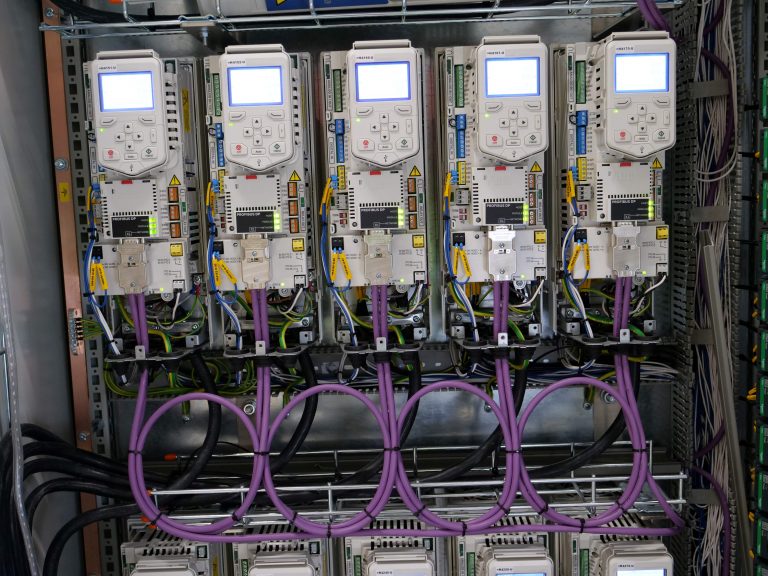
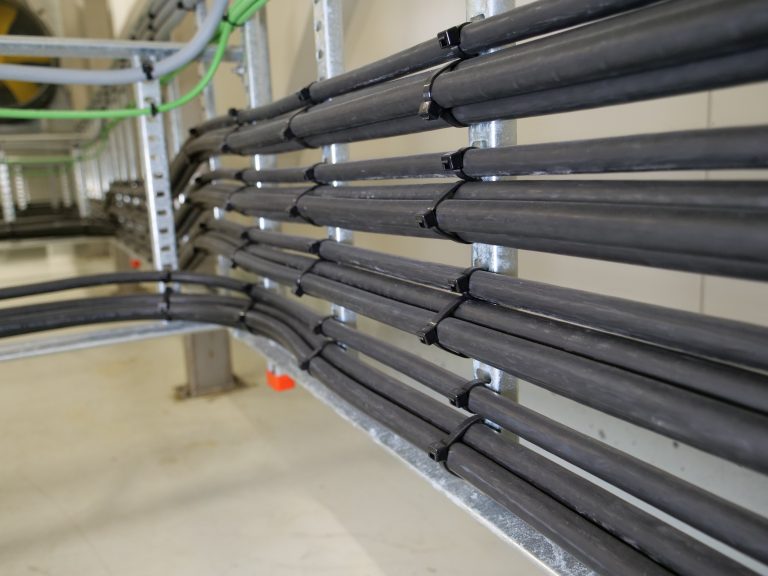
The complexity is further increased by a network architecture comprising three switch and control rooms, in which industrial communication runs via PROFIBUS. Further requirements are imposed by national legislation: halogen-free cables with a defined fire classification in accordance with CPR Dca-s2,d2,a2 are mandatory. All these factors call for precise planning and an electrical infrastructure that functions reliably even under demanding EMC conditions.
72 kilometres of connection technology to counter the risk of interference
To meet these high requirements, Moss Elektro relies on a comprehensive portfolio of connection solutions from LAPP. “When we received an enquiry from Moss Elektro regarding an EMC cable for longer lengths, which was to provide good EMC protection whilst also meeting certain additional specifications, it occurred to me that LAPP had launched a servo cable based on the new, patented zeroCM® technology,” explains Lars Nilsen, Technical Manager at LAPP in Norway “The idea of further developing this cable to also meet the customer’s additional requirements was appealing. We then quickly contacted our colleagues in Stuttgart to arrange a meeting between the customer and LAPP headquarters to discuss a possible solution.” Accordingly, at the heart of the LAPP solution is the ÖLFLEX® SERVO 718 CH zeroCM, a servo cable developed specifically for the project to meet high EMC requirements and accommodate long cable runs, which also includes a pair of control wires for thermistor monitoring of the motors. Around nine kilometres of this cable are used in the plant. The integrated zeroCM® technology is based on a patented cable design featuring a special stranding technique: Three symmetrically arranged phase conductors are located inside the cable and are surrounded by a earthing conductor with opposite-strand lay. This construction ensures almost complete electrical symmetry, thereby eliminating magnetic coupling and significantly reducing capacitive coupling. This reduces unwanted leakage and common-mode currents at the inverter output and on adjacent transmission paths – such as data cables – by up to 80 per cent.
To meet these high requirements, Moss Elektro relies on a comprehensive portfolio of connection solutions from LAPP. “When we received an enquiry from Moss Elektro regarding an EMC cable for longer lengths, which was to provide good EMC protection whilst also meeting certain additional specifications, it occurred to me that LAPP had launched a servo cable based on the new, patented zeroCM® technology,” explains Lars Nilsen, Technical Manager at LAPP in Norway “The idea of further developing this cable to also meet the customer’s additional requirements was appealing. We then quickly contacted our colleagues in Stuttgart to arrange a meeting between the customer and LAPP headquarters to discuss a possible solution.” Accordingly, at the heart of the LAPP solution is the ÖLFLEX® SERVO 718 CH zeroCM, a servo cable developed specifically for the project to meet high EMC requirements and accommodate long cable runs, which also includes a pair of control wires for thermistor monitoring of the motors. Around nine kilometres of this cable are used in the plant. The integrated zeroCM® technology is based on a patented cable design featuring a special stranding technique: Three symmetrically arranged phase conductors are located inside the cable and are surrounded by a earthing conductor with opposite-strand lay. This construction ensures almost complete electrical symmetry, thereby eliminating magnetic coupling and significantly reducing capacitive coupling. This reduces unwanted leakage and common-mode currents at the inverter output and on adjacent transmission paths – such as data cables – by up to 80 per cent. This improves the system’s electromagnetic compatibility and operational reliability. On the load side, the cable provides a clean reference potential and allows for a double installation length that does not require a filter. It thus increases the efficiency of entire drive systems by up to 4 per cent.
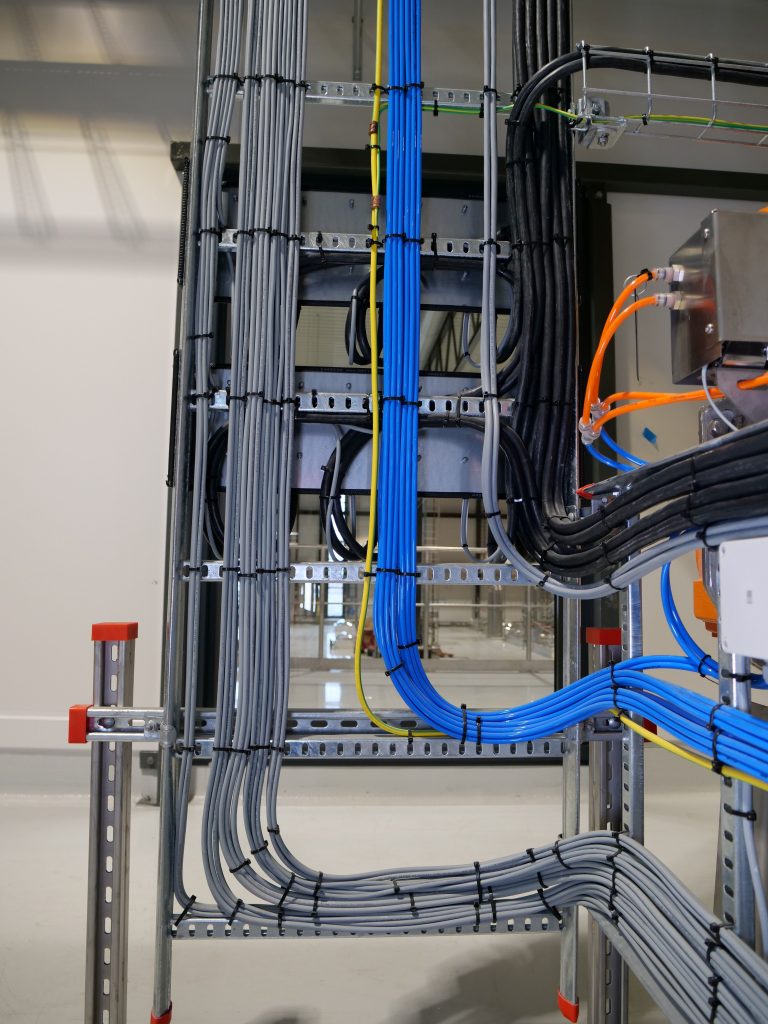
In addition, tried-and-tested cables for power and data transmission are in use, including the ÖLFLEX® CLASSIC 130 H and 135 CH, as well as communication solutions such as ETHERLINE® and UNITRONIC® PB. Together, they form the backbone of the electrical infrastructure – spanning around 72 kilometres in total. Around 400 SKINTOP® MS-M BRUSH EMC cable glands ensure 360° contact with the cable shield where the cables enter motor terminal boxes and control cabinets. The low-impedance shield connection achieved in this way ensures effective dissipation of high-frequency interference currents – a key prerequisite for rapid commissioning and maintenance-friendly operation over the coming decades.
Torgeir Thorud, Senior Electrical Engineer at Moss Elektro, explains: “It was crucial for us to find a solution that reliably meets the high EMC requirements. At the same time, we wanted a partner who offers a broad portfolio from a single source and provides the necessary flexibility for project-specific adaptations. This combination was the deciding factor in choosing LAPP. Particularly valuable was the opportunity to implement a version of the zeroCM® technology tailored to our requirements.” Kristoffer Pettersen adds: “Moss Elektro sees itself as more than just an electrical contractor. We want to drive new technologies forward and shape the future. That is why we immediately recognised the benefits of zeroCM®.”
Collaborative development across national borders
Behind the implementation lies a closely coordinated development process. Teams from LAPP in Germany, Norway and Italy worked together with Moss Elektro to select suitable connection solutions and, in the case of the ÖLFLEX® SERVO 718 CH zeroCM, to develop a new cable that meets both technical and fire safety CPR requirements. In less than six months, a project requirement was transformed into a market-ready cable, including the design, extensive fire tests and production. Close coordination between all parties involved also made it possible to respond quickly and flexibly to changes as the project progressed.
For the operator, operational safety was the top priority, as FARA, we are creating a plant that not only meets today’s requirements but is also designed to cope with increasingly stringent environmental regulations in the long term. This technically robust and future-proof solution was only made possible by the close and trust-based collaboration of all project partners.”
At LAPP, too, the project is regarded as a prime example of great collaboration across national and disciplinary boundaries. Stefan Hilsenbeck, Head of Advanced Technology Development at LAPP, emphasises: “The FARA project has demonstrated how important close coordination is between the customer and the connection specialist. This is the only way to efficiently resolve complex requirements, such as those relating to EMC, standards or cable design. We are therefore all the more pleased that, together, we have been able to implement a solution that has already proven its worth within the project and is now available as a standard for future applications as well.”
With high wastewater treatment efficiency, energy-positive operation and EMC-compliant infrastructure, FARA is setting a new benchmark for modern wastewater treatment plants – and demonstrating how environmental goals and industrial requirements can be successfully combined.