

With the expansion of renewable energy, the global demand for high-performance battery energy storage systems (BESS) is growing. They compensate for fluctuations in electricity generation from wind and solar energy, stabilise electricity grids and create the conditions for a flexible and reliable energy supply. In modern containers, power supply, data and fire protection systems operate together in a very confined space, often at high temperatures and in a humid environment. High-voltage cables and data cables must function reliably side by side, withstand mechanical stresses and deliver consistent signal quality over the long term.
A leading global manufacturer of battery energy storage systems, based in Korea, also faced this challenge. For a large-scale BESS project, the company was seeking high-performance and reliable connectivity solutions for various applications within the storage architecture. The requirements included robust products for power and data transmission, as well as comprehensive technical support for planning and implementation. This is where LAPP, the global market leader in integrated solutions for cable and connection technology, came into the picture.
Complexity in a confined space
The user required end-to-end connection technology for different areas within its BESS platform. In addition to the main power transmission, auxiliary power supply, internal wiring, signal and bus communication, as well as Industrial Ethernet applications, also had to be supported reliably. Furthermore, fire-resistant cables and cable assemblies were used for the integration of the systems. The challenge was to integrate these different requirements into a consistent and reliable infrastructure.
The project was further complicated by demanding operating conditions. The selected components had to deliver reliable performance in high-temperature and humid environments. In addition, the customer required highly flexible cable solutions to facilitate installation within the systems. Since modern battery energy storage systems depend on continuous communication between sensors, control units, and energy management systems, maintaining consistently high signal and data integrity was equally critical.
In addition to the technical requirements, the time factor also played a decisive role. The customer expected rapid project implementation and close technical support during qualification and integration. Rather than a mere supplier of individual components, they were therefore looking for a partner who understood the application and could provide the appropriate solution for every aspect of the battery storage system.
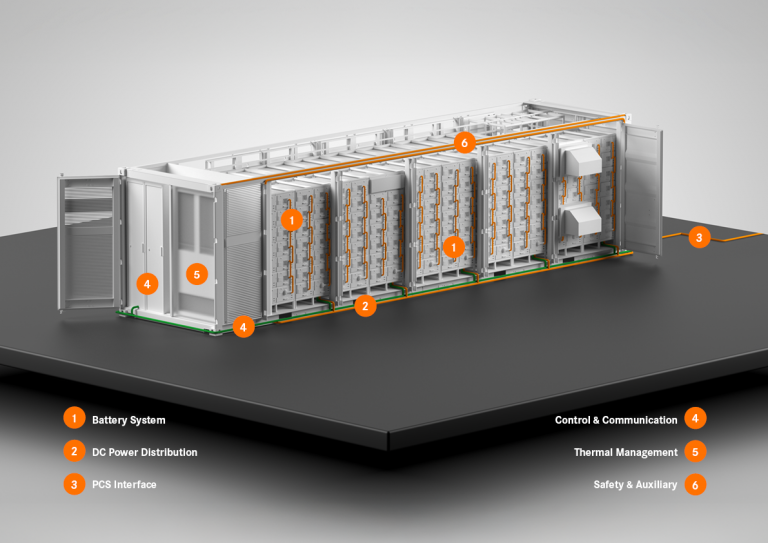
Connectivity solutions for all levels of the battery storage system
To meet the project’s diverse requirements, LAPP Korea worked closely with the customer to develop a customised connectivity concept. The goal was to equip the various areas of the battery energy storage system with a seamless and reliable connectivity infrastructure.Rather than supplying individual components, LAPP adopted a holistic approach and provided integrated solutions which, in many cases, replaced conventional cabling methods. This enabled higher standards of robustness and signal quality, whilst simultaneously reducing complexity and ensuring high operational reliability and resilience.
This comprehensive approach was made possible through close technical collaboration throughout the project. From the early analysis phase onwards, LAPP Korea’s team tailored cables, connectors, and cable assemblies to the specific requirements of each application area. During qualification and integration, the team maintained direct collaboration with the customer’s engineers, helping to streamline specifications and accelerate testing activities. Within LAPP Korea, too, the sales, technical and operational departments worked closely together: queries were resolved immediately and qualification steps were processed swiftly. This enabled the project to move quickly into the integration phase and meet the customer’s schedule.
A blueprint for future projects
The successful course of the project highlights how important it is to take a holistic view of connection technology in modern battery energy storage systems. Power transmission, data communication and safety technology must work together reliably to ensure that BESS systems can be operated efficiently and safely in the long term.

This was made possible by a combination of application-specific advice, tailored products and technical support, which enabled even the most demanding requirements within modern storage architecture to be reliably implemented during the project. As the market continues to grow, the importance of such end-to-end solutions will only increase, as larger and more complex energy storage systems require integrated concepts rather than individual components.
“Solution-oriented offerings that are precisely tailored to customers’ requirements remain the key to taking the lead in the ESS market,” emphasises Chenjie Gu, Industry Manager for Battery Manufacturing at LAPP. After all, when the sun goes down and the wind dies down, the connection technology must be in place so that battery storage systems can step in.